By applying more structured and critical thinking, you can understand the problem at hand better and come up with more creative solutions to it. The Productive Thinking Model, created by Tim Hurson, can help you do just that.
It's best used when a problem is already defined and you're looking for creative solutions.
How to use it
This tool gives you a 6-step framework for problem-solving. The six steps are:
- Ask "What's going on?"
- Ask "What's success?"
- Ask "What's the question?"
- Generate answers
- Forge the solution
- Align resources
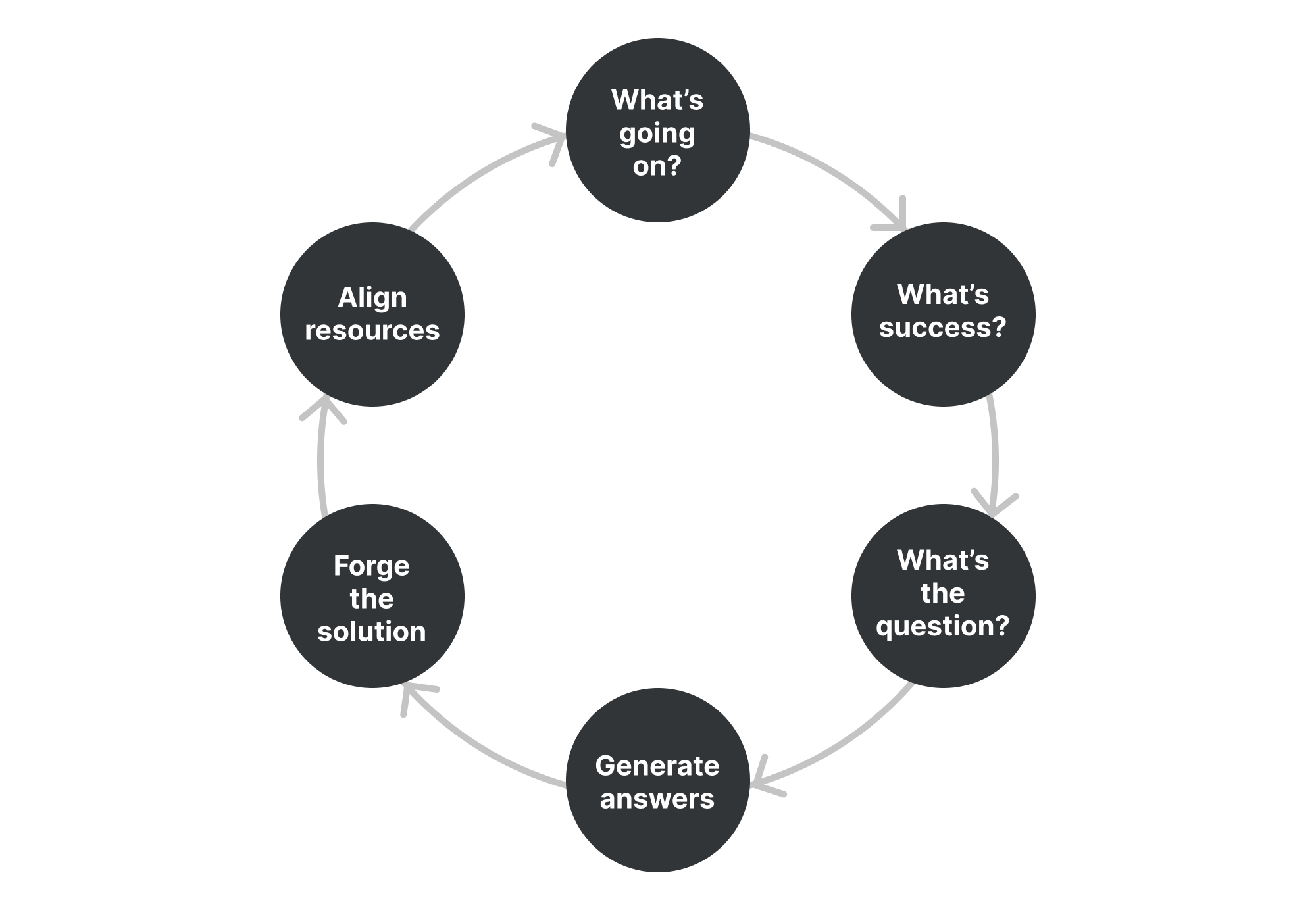
Let's look at each step in more detail.
1. Ask "What's going on?"
The first step is about understanding the problem better. You can use these guiding questions to help you:
- What's the problem exactly?
- What's the impact of this problem?
- What do I already know? What information do I have?
- Who is involved in this?
- What's the vision of the future when this problem is solved?(This is what Hurson calls the "Target Future")
Document the answers you gather here as you'll need them later in the process.
2. Ask "What's success?"
This step will help you define what success looks like in your vision of the future (that you created in the previous step).
To come up with the success criteria, you can use the DRIVE framework:
- What do you want the solution to do?
- What are the restrictions? What must it not do?
- (You can use inversion to help you here)
- What resources can we invest in this?
- What values should the solution have?
- What are the essential outcomes?
Feel free to cycle through these questions until you have a clear vision of success in front of you.
3. Ask "What's the question?"
Now it's time to generate questions that must be answered to achieve your vision (the Target Future). Hurson calls these "catalytic qu